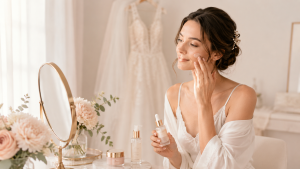
Choosing a foundation may seem simple, but it is one of the biggest doubts in makeup.
At first glance, it seems enough to find a shade similar to your skin tone. But in practice, many other factors influence the result: skin type, foundation texture, finish, coverage, undertone, and even how the skin behaves throughout the day.
A foundation may look beautiful right after application and, a few hours later, start to cling to dry areas, become shiny, settle into fine lines, or feel uncomfortable on the skin. It can also happen that the colour looks right in the bottle but turns too yellow, pink, grey, or dark on the face.
For this reason, the right foundation is not just the one with the closest colour match. It is the one that respects the skin, adapts to your routine, and creates a natural, comfortable, and balanced result.
A foundation should even out the skin, not hide it completely. It should enhance the face without creating a mask. It should help the makeup look better, but without taking away lightness, expression, or naturalness.
In this article, I explain the main points to consider when choosing a foundation suited to your skin type, the finish you want, and the result you expect to see in the mirror.
Before choosing foundation, understand your skin type
Before thinking about colour, brand, or coverage, it is important to understand your skin type.
This is one of the most important steps, because a foundation that works very well for one skin type may not work for another. The same formula can look radiant and beautiful on one person, but heavy, oily, or uncomfortable on another.
Dry skin, for example, tends to need more comfortable and hydrating formulas. Oily skin usually benefits from foundations with better shine control. Combination skin may require a balance between dry areas and oilier zones. Sensitive skin calls for gentleness, tolerance, and careful product selection.
It is also important to remember that skin is not always the same.
It can change with age, seasons, hormonal changes, skincare routines, stress, diet, or even climate. A foundation that works very well in winter may feel too heavy in summer. Skin that used to be oily may become more dehydrated. Skin that seemed normal may start reacting to certain products.
For this reason, choosing a foundation should not be a one-time decision for life. It should follow the skin as it is in the present moment.
A simple way to better understand your skin type is to observe how it behaves a few hours after cleansing, without makeup.
If the skin feels tight, with dry areas or flaking, it may be dry or dehydrated. If it becomes shiny quickly, especially on the forehead, nose, and chin, it may be oily. If it is shiny in the T-zone but normal or dry on the cheeks, it is likely combination skin. If it becomes red, stings, reacts easily, or feels uncomfortable with several products, it may be sensitive skin.
This observation is very helpful when choosing the foundation’s texture and finish.
The right foundation should work with the skin, not against it.
If the skin is dry, a very matte foundation can emphasise texture. If the skin is oily, a very luminous foundation can turn into excess shine. If the skin is combination, a too-rich formula can feel heavy in some areas while a too-drying formula can highlight others.
Before choosing a foundation, it is worth asking: what does my skin need to feel comfortable throughout the day?
The answer to this question is the best starting point.
Foundation for dry skin
Dry skin tends to feel uncomfortable, tight, or show small flaky areas.
In some cases, it may look dull, lacking radiance, or with more visible texture. When the foundation is not suitable, it can settle into fine lines, cling to dry patches, and make the face look less natural.
In this skin type, comfort is essential.
The foundation should help even out the skin tone without stripping hydration. It should apply smoothly, without emphasising dry areas, and keep the skin comfortable for several hours.
Liquid or cream foundations usually work better, with a natural, luminous, or satin finish. These finishes help restore freshness to the skin and avoid an overly dry or heavy effect.
Very matte, long-wear, or dry-textured foundations may not be the best option, especially if the skin is not well prepared. They can emphasise texture, make the skin look tired, or cause the makeup to look less blended.
This does not mean dry skin must always use a very shiny foundation. The goal is balanced radiance, not excessive glow.
Skin preparation makes a big difference.
Before foundation, the skin should be clean, hydrated, and comfortable. A good moisturiser suited to the skin type helps create a more even surface. In some cases, a hydrating or subtle illuminating primer may be useful, as long as it does not make the skin too slippery.
It is also important to apply foundation in thin layers.
When the skin is dry, applying too much product can have the opposite effect. Instead of hiding texture, it can highlight it. For this reason, it is better to start with a small amount and build coverage only where needed.
If there are areas with more redness, spots, or imperfections, it may be better to correct them locally with concealer instead of applying a thick layer of foundation across the whole face.
Dry skin tends to look better when makeup respects its natural texture.
The goal should be to even out, illuminate, and bring comfort, not to cover everything heavily.
What to look for in a foundation for dry skin
- Hydrating formulas;
- liquid or cream texture;
- natural, satin, or luminous finish;
- light to medium coverage;
- application in thin layers;
- proper skin hydration before makeup;
- minimal powder, only where truly needed.
Foundation for oily skin
Oily skin tends to become shiny throughout the day, especially in the T-zone: forehead, nose, and chin.
It may also feel like makeup does not last, that foundation starts to separate, that the face looks too shiny in photos, or that products fade over time.
In these cases, foundation choice should take durability and shine control into account.
Usually, oil-free, long-wear foundations with a soft matte or natural-matte finish work very well. The idea is not to make the skin completely flat, but to control excess oil and keep the face balanced.
It is important to distinguish radiant skin from oily skin.
Radiance brings freshness. Excess oil can make makeup lose definition, move, or look heavy. The right foundation should help achieve balance.
However, a common mistake with oily skin is trying to over-dry it.
Using very harsh products, extremely matte foundations, or too much powder can make the face look heavy, emphasise texture, and even increase oil production as a response.
Oily skin also needs hydration. The key is choosing lightweight, fresh textures that do not add weight or excessive shine.
Skin preparation is just as important as foundation.
A gentle cleanse, a light moisturiser, and, if appropriate, a mattifying primer can help makeup last longer. Powder can also be useful, but should be applied in moderation, especially in areas where shine appears most.
It is not necessary to powder the entire face if only the T-zone becomes oily. Often, the result looks more natural when only the necessary areas are mattified while the rest of the face keeps some life.
It can also be helpful to refresh makeup during the day using blotting papers or a small amount of powder instead of layering product repeatedly.
Foundation for oily skin should be durable, but comfortable.
If it is too heavy, it can create a mask-like effect. If it is too light and not set properly, it can disappear quickly. The ideal is a balanced formula that controls shine without erasing the skin completely.
What to look for in a foundation for oily skin
- Oil-free formulas;
- soft matte or natural-matte finish;
- good longevity;
- light to medium texture;
- shine control;
- light hydration before foundation;
- powder only where needed;
- avoid excessive layers.
Foundation for combination skin
Combination skin is very common and can be one of the most difficult skin types to balance.
It usually presents areas with more oiliness, especially on the forehead, nose and chin, and areas that are more normal or dry on the cheeks, jawline or around the mouth.
This means the skin does not behave the same way across the entire face.
A very matte foundation may work well on the T-zone, but can emphasise dry areas. A very luminous foundation may look beautiful on the cheeks, but create excessive shine in the centre of the face.
That is why, for combination skin, the key word is balance.
In most cases, a natural-finish foundation with light to medium coverage and good longevity can be an excellent option. This type of foundation helps even out the skin without feeling too heavy or too shiny.
Targeted preparation by areas is very important.
In drier areas, more hydration may be needed. In oilier areas, it can make sense to use a mattifying primer or apply powder more strategically. It is not necessary to treat the whole face in the same way.
This is a point that makes a big difference.
Many people with combination skin try to solve everything with a single extremely matte or very long-wearing foundation. The problem is that these formulas can make dry areas uncomfortable or emphasise texture.
Others choose very luminous foundations to bring freshness to the skin, but then find that makeup becomes shiny very quickly in the T-zone.
The ideal approach is to find a versatile foundation and adjust the rest of the skin preparation.
Here too, less product usually works better.
Applying too much foundation on the T-zone can cause makeup to break down more easily as oil appears. On dry areas, excess product can build up and look heavy.
A thin-layer application helps control the result more effectively. If more coverage is needed, it can be built up only where necessary.
Powder should be used with intention.
For combination skin, it is often enough to apply powder only on the forehead, nose and chin, while keeping the cheeks more natural and luminous. This helps avoid a heavy finish and keeps the skin looking real.
The right foundation for combination skin does not need to solve everything on its own. It should be combined with good skin preparation, balanced application and small adjustments by area.
When this balance is achieved, the result looks natural, comfortable and longer-lasting.
What to look for in a foundation for combination skin
- Natural or natural-matte finish;
- light to medium coverage;
- comfortable, balanced formula;
- good longevity;
- different preparation by areas;
- hydration in drier areas;
- oil control in the T-zone;
- strategic powder application;
- avoid excess product.
Foundation for sensitive skin
Sensitive skin requires special attention when choosing a foundation.
This skin type can react easily to certain ingredients, fragrances, alcohol, heavier textures or overly aggressive products. It may become red, feel burning, itchy, warm or uncomfortable throughout the day.
That is why, when choosing a foundation for sensitive skin, the first criterion should not be coverage alone, but comfort.
A foundation can provide good coverage, have a beautiful shade and an elegant finish, but if it makes the skin uncomfortable, it is not the right choice.
Sensitive skin often benefits from simpler, gentler and lighter formulas. Whenever possible, it is useful to look for fragrance-free products with good tolerance and designed for sensitive skin.
This does not mean all sensitive skin reacts the same way. Some tolerate liquid makeup well. Others prefer mineral textures or very lightweight formulas. Others need to avoid specific ingredients they already know cause reactions.
That is why knowing your own skin is essential.
If there is a tendency towards redness, rosacea, allergies or frequent irritation, foundation choice must be even more careful. In these cases, it is important to avoid experimenting on important days. A new foundation should be tested in advance, with enough time to observe how the skin reacts.
The test can be done on a small area of the face for a few hours before using the product in a full makeup look. This helps identify burning, redness, itching or discomfort.
It is also important to avoid excessive layers.
When skin is sensitive, applying too much product can increase the feeling of heaviness and discomfort. Instead of trying to cover everything with foundation, it may be better to use a thin layer for evening out and then correct specific areas with concealer.
For example, if there is redness, it is not always necessary to use a heavy foundation. A comfortable formula, well applied, combined with spot correction, can create a more natural and less irritating result.
Skin preparation before foundation should also be gentle.
The skin should be clean, hydrated and calm. Strong active products, exfoliants or new masks should be avoided before makeup, especially if the skin tends to react.
The right foundation for sensitive skin should respect the skin. It should even out without irritating, provide comfort without heaviness, and allow makeup to be worn with confidence.
What to look for in a foundation for sensitive skin
- Gentle and comfortable formulas;
- fragrance-free products whenever possible;
- light to medium texture;
- good skin tolerance;
- buildable coverage in thin layers;
- prior testing before important events;
- avoid excess product;
- simple, already-tested skincare preparation.
Foundation for mature skin
For mature skin, foundation should enhance the skin without making it heavy.
Over time, it is natural for the skin to become thinner, drier, less elastic or more lined. Spots, loss of radiance or areas with different texture may also appear.
All of this should be considered when choosing a foundation.
A common mistake is trying to compensate for these changes with very thick or high-coverage foundations. At first glance, they may seem more effective. However, they often settle into lines, creases and textured areas, creating a heavier and less natural effect.
For mature skin, less product usually works better.
Lightweight, hydrating foundations with a natural or satin finish tend to work very well. They help even out the tone, restore freshness and create a more elegant result.
The goal should not be to completely erase the skin, but to soften, brighten and balance it.
Mature skin still has texture, expression and movement. Foundation should follow that movement, not create a rigid layer over the face.
That is why overly matte or very dry formulas may not be ideal. They can make the skin look flat, emphasise fine lines and remove radiance.
Natural, satin or slightly luminous finishes usually bring more freshness. However, as with any skin type, shine should be balanced. The goal is healthy glow, not excess shine.
Skin preparation is essential.
Before foundation, the skin should be well hydrated and comfortable. A good moisturiser can help smooth dry areas and allow foundation to glide better. In some cases, a hydrating or smoothing primer may help, as long as it does not feel heavy.
Application also makes a big difference.
Thin layers are preferable to a thick one. You can apply a small amount of foundation in the centre of the face and blend it outward, adding only where necessary. This way, the skin still looks like skin.
Powder should be used very sparingly.
In excess, it can emphasise lines, remove luminosity and leave the skin looking drier. If it is necessary to set the makeup, the ideal is to apply a small amount and only in areas where there is a greater tendency for shine or transfer.
The right foundation for mature skin should bring comfort, softness and luminosity. It should improve the skin without overloading it.
When formula, amount and application are balanced, the result looks fresher, more natural and more elegant.
What to look for in a foundation for mature skin
- Lightweight, hydrating formulas;
- natural, satin or slightly luminous finish;
- light to medium coverage;
- application in thin layers;
- small amount of product;
- targeted correction with concealer;
- avoid very thick or drying foundations;
- use little powder;
- careful skin preparation before foundation.
Choose the right finish: matte, natural or luminous
The finish of foundation completely changes the final result of makeup.
Two foundations can have the same shade and coverage, but look very different on the skin if they have different finishes.
That’s why, in addition to choosing the right formula for your skin type, it’s important to understand the desired finish.
A matte foundation reduces shine and leaves the skin looking more velvety and polished. It can work well for oily skin or for those who like a more controlled, long-lasting result.
However, if it is too matte or if the skin is dry, it can make the face look dull, emphasise texture and make makeup appear less natural.
A luminous foundation gives more glow and freshness to the skin. It can be very flattering on dry, dull or dehydrated skin, as it helps create a healthier appearance.
But on oily skin, a very luminous foundation can quickly turn into excessive shine, especially in the T-zone.
Between these two extremes, there is the natural finish.
This is usually the most versatile, because it is neither fully matte nor overly shiny. It leaves the skin looking balanced, comfortable and closer to its real texture.
For many people, a natural-finish foundation is the safest everyday choice.
There is also the satin finish, which sits between natural and luminous. It gives a very subtle, elegant and controlled glow without looking oily. It can work very well for normal, dry or mature skin, or for anyone who wants a fresh result without excess.
The choice of finish also depends on personal preference.
Some people like completely matte skin. Others prefer luminous skin. Others simply want to even out the complexion without the foundation being noticeable.
None of these options is wrong. The important thing is that the finish works with your skin and your routine.
A person with oily skin may like luminosity but may need to control the T-zone with powder. A person with dry skin may prefer a more matte result but should ensure the skin is well hydrated before application.
The finish can also be adjusted with other products.
A natural foundation can become more luminous with a hydrating or subtle illuminating primer. A luminous foundation can be controlled with powder in specific areas. A matte foundation can look less dry if the skin is well prepared beforehand.
Foundation does not work alone. The final result depends on skin preparation, the amount applied, powder, concealer and how all the products are combined.
Simple summary of finishes
- Matte: helps control shine and works well for oily skin;
- Natural: balanced, versatile and close to real skin appearance;
- Luminous: adds freshness and suits dry, dull or dehydrated skin;
- Satin: elegant, soft and with a controlled healthy glow.
Choose the coverage: light, medium or full
Foundation coverage should be chosen according to the desired result.
Many people think they need a full-coverage foundation to achieve beautiful skin. But that is not always the case.
Light coverage evens out skin tone without fully covering natural texture. It is ideal for those who like a discreet, fresh and very skin-like result.
It may not cover blemishes, spots or strong redness, but it helps create a more even and lightweight complexion.
Medium coverage is one of the most versatile options.
It corrects more than light coverage but can still look natural, especially when applied in thin layers. It is a good option for those who want to even out skin tone, soften imperfections and maintain comfort.
Full coverage covers more. It can be useful for specific situations such as events, photography, more visible pigmentation or when a more polished result is desired.
However, it requires more care in application.
If applied in excess, it can look heavy, emphasise texture or appear mask-like. The higher the coverage, the more important it becomes to choose the right formula, prepare the skin and apply small amounts at a time.
In most cases, a light to medium coverage foundation applied well looks more elegant than a thick layer of full-coverage foundation.
It is also important to understand that foundation does not need to cover everything.
The purpose of foundation is to even out the complexion. For specific concerns such as blemishes, spots, under-eye circles or localised redness, concealer can be a better option.
This approach usually gives a more natural result: a thin layer of foundation over the entire face and targeted correction only where needed.
This way, the skin still visually breathes. It still has texture, movement and naturalness.
Another important point is the ability to build coverage.
Some foundations are buildable, meaning you can start with a small amount and add more where needed. This gives more control and avoids applying too much product at the start.
Before choosing coverage, it is worth thinking about the goal:
Do you just want to even out the skin?
Do you want to cover redness?
Do you want a natural everyday look?
Do you want a more polished look for photography or events?
Do you like feeling light skin or prefer more visible coverage?
These answers help guide the choice.
The right coverage is not the highest one. It is the one that achieves the desired result without compromising comfort and naturalness.
Simple summary of coverage
- Light coverage: ideal for a natural and fresh look;
- Medium coverage: balances correction and naturalness;
- Full coverage: covers more but requires careful application;
- Buildable coverage: allows the result to be built in layers.
How to choose the right foundation shade
After understanding skin type, finish and coverage, comes one of the most confusing parts: choosing the foundation shade.
The right foundation should disappear into the skin.
This means that once applied and blended well, it should not be obvious where it starts or ends. The face should look even, without a visible difference compared to the neck and décolletage.
A common mistake is choosing a foundation based only on the packaging or testing it on the hand.
The hand rarely has the same tone as the face, neck or chest. It may be more tanned, lighter, more pink or more sun-exposed. Therefore, testing foundation on the hand can lead to the wrong choice.
The best area to test is the jawline.
This area allows comparison between the face and neck and helps determine whether the colour works as a whole. The foundation should blend well between these areas without creating a visible line.
Whenever possible, foundation should be checked in natural light.
Artificial lighting in stores, bathrooms or strong makeup lights can distort colour perception. A shade that looks perfect in-store may turn out too dark, yellow or pink in daylight.
It is also important to wait a few minutes before deciding.
Some foundations oxidise. This means they may darken or slightly change tone after being applied to the skin. For this reason, testing and buying immediately is not always the best idea. The ideal approach is to apply, wait a little and observe how the colour develops.
The foundation should not be chosen darker to add colour to the face.
This is another very common mistake. The purpose of foundation is to even out the skin, not to tan it. When the foundation is too dark, it can create contrast with the neck, make the face look heavy and less natural.
To warm up the face or add dimension, products like bronzer, blush or contour should be used. The foundation should be as close as possible to the real skin tone.
The neck and décolletage should also be considered.
In some people, the face is lighter or redder than the neck and chest. In others, the chest may be more tanned. In these cases, the foundation should aim for harmony across the whole visible area.
The right shade is not just the one that matches the face alone, but the one that makes sense between face, neck and chest.
If you are between two shades, it is often safer to choose the slightly lighter one and adjust with bronzer, rather than choosing a shade that is too dark. However, this always depends on undertone and how the foundation behaves on the skin.
Choosing the right shade takes patience.
But when the colour is right, the foundation becomes invisible. The skin looks more even, more polished and more natural.
Practical tips for choosing foundation shade
- Test foundation on the jawline;
- always compare with the neck;
- check in natural light;
- wait a few minutes to see if it oxidises;
- avoid choosing a darker shade to “add colour”;
- use bronzer or blush to warm the face;
- consider the décolletage if visible;
- do not choose based only on packaging;
- avoid testing only on the hand;
- look for a shade that disappears into the skin.
Understand your skin’s undertone
After choosing the type of foundation, the finish, the coverage and the approximate shade, there is another very important point: the skin undertone.
The undertone is the underlying color of the skin. It is not always obvious at first glance, but it has a strong influence on how the foundation looks on the face.
Two people can have the same skin tone — for example, light or medium skin — and need completely different foundations because they have different undertones.
That is why sometimes a foundation seems to match in depth, but still does not look natural. It can appear too yellow, too pink, too orange, too ashy or dull. In these cases, the issue may not be just the shade, but the undertone.
Simply put, undertones can be warm, cool or neutral.
A warm undertone skin usually pairs better with foundations that have golden, yellow or peachy bases. A cool undertone skin tends to work better with pink or slightly bluish foundations. A neutral undertone skin works best with balanced foundations that are neither too yellow nor too pink.
There are a few simple ways to try to identify your undertone.
One is to look at the veins on your wrist. If they look more blue or purple, your undertone may be cool. If they look more green, it may be warm. If it is hard to tell or looks like a mix of both, your undertone may be neutral.
Another way is to observe how your skin reacts to different colors. Some people feel more comfortable in gold, warm tones, coral, beige or brown. Others look better in silver, pink, lilac, blue or cool tones. This is not an absolute rule, but it can give clues.
It can also help to notice what happens when you apply different foundations.
If most of them look too yellow or orange, the undertone may be too warm. If they look too pink or ashy, you may need a more neutral or warm base.
Undertone should not be analyzed in isolation. It should be considered together with the face, neck and chest.
The goal is for the foundation to create harmony. It does not need to change your natural skin color. It should simply even it out and make the skin look healthy.
Often, when the undertone is right, the foundation seems to disappear more naturally. The skin looks brighter, less dull and more natural.
Simple undertone guide
- Warm undertone: skin tends to pair better with golden, yellow or peach-based foundations;
- Cool undertone: skin tends to pair better with pink, cool-neutral or slightly bluish foundations;
- Neutral undertone: skin tends to work best with balanced foundations, without too much yellow or pink;
- Olive undertone: may need more neutral, soft golden or slightly green-based foundations to avoid a gray or orange effect.
Prepare the skin before foundation
Even the best foundation can look less flattering if the skin is not properly prepared.
Skin preparation affects how foundation applies, blends, lasts and behaves throughout the day. Dehydrated skin can make foundation cling to texture. Very oily skin can make makeup break down faster. Sensitive skin can feel uncomfortable with products that might otherwise work well.
That is why, before foundation, it is important to create clean, hydrated and comfortable skin.
The first step is cleansing. The skin should be clean, but not stripped. There is no need for overly harsh products or for the skin to feel tight. A gentle cleanse is usually enough.
Then comes hydration.
This step should be adapted to the skin type. Dry skin may need richer hydration. Oily skin may prefer lightweight gel or oil-free textures. Sensitive skin should use simple, comfortable and already tested products.
Moisturizing helps foundation blend better and look more integrated. However, it is important not to overapply, especially before makeup. Too much cream can make foundation slip, separate or wear off faster.
During the day, sunscreen should also be considered. The ideal is to choose a formula that works well under makeup, without pilling, creating excess shine or changing the foundation finish.
After hydration and sunscreen, primer can be used.
But primer is not necessary for everyone. It should be chosen based on skin needs.
Oily skin may benefit from a primer that controls shine in the T-zone. Dry skin may prefer a hydrating primer. Textured skin may like a smoothing primer. Normal skin may not need primer at all if the foundation already applies well.
The most important thing is to avoid using too many products.
Skin preparation should support the foundation, not create multiple competing layers. Often, less product leads to a more beautiful, lightweight and long-lasting result.
It is also important to wait a few minutes between skincare and foundation. This allows products to settle and prevents makeup from mixing with still-wet creams.
Foundation application should start with a small amount.
It is easier to add product than to remove excess. Starting in the center of the face and blending outward usually works well, since this is where redness, shine or uneven tone is often more visible.
If more coverage is needed, it can be built in thin layers only where required.
The right preparation makes foundation look more natural. Instead of sitting on top of the skin, it blends in more seamlessly with the face.
Simple steps before foundation
- Gently cleanse the skin;
- apply hydration suited to your skin type;
- use sunscreen during the day;
- apply primer only if needed;
- wait a few minutes before foundation;
- start with a small amount;
- build coverage only where necessary;
- avoid excessive layers of product.
Common mistakes when choosing foundation
Choosing a foundation can feel like trial and error. And to some extent, it is normal to test products until you find one that works well.
Still, there are some very common mistakes that can be avoided.
Testing only on the hand
This is perhaps the most frequent mistake.
The hand rarely has the same color as the face, neck or chest. It may be more tanned, lighter, pinker or drier. Because of this, testing foundation only on the hand can lead to the wrong choice.
The best area to test is the jawline, because it allows comparison between the face and the neck.
Choosing a foundation that is too dark
Many people choose a darker foundation to add “color” to the face.
But foundation should not be used for bronzing. It should be used for evening out the skin.
When the foundation is too dark, it creates contrast with the neck, defines the jawline too harshly and can make makeup look unnatural.
To add warmth, dimension or a healthy look, it is better to use bronzer, blush or contour.
Ignoring skin type
A foundation should not be chosen just because it is popular, viral or recommended by someone else.
If the formula is not suitable for your skin type, it may not work well.
A very matte foundation can emphasize dry skin. A very luminous foundation can create excess shine on oily skin. A heavy foundation can feel uncomfortable on sensitive skin. A thick foundation can settle into lines on mature skin.
The best foundation is the one that works for your skin, not just for someone else’s.
Choosing high coverage unnecessarily
More coverage does not always mean better results.
A high-coverage foundation can be useful in some cases, but it can also look heavy if overapplied. Often, a light or medium coverage foundation combined with concealer only where needed creates a more natural and elegant result.
Skin does not need to be completely covered to look beautiful.
Not checking foundation in natural light
Artificial lighting can significantly change how a color appears.
In a store or bathroom, a foundation may look perfect. In natural light, it may appear too dark, too yellow, too pink or too gray.
Whenever possible, it is best to test the product, step into natural light and observe the result before buying.
Not waiting to see if it oxidizes
Some foundations slightly change color after application.
They may darken, turn more orange or shift in tone. That is why it is important to wait a few minutes before deciding if the shade is correct.
A foundation that looks perfect in the first minute may not be the best choice after half an hour.
Using too much product
Quantity makes a big difference.
Even a good foundation can look heavy if overapplied. The best approach is to start with a small amount and build only where needed.
Foundation should improve the skin, not cover it with a thick layer.
Checklist for choosing the right foundation
Before buying a foundation, it is worth checking a few points.
This checklist can help you choose more confidently and avoid impulse purchases.
- What is your skin type?
- Is your skin dry, oily, combination, sensitive or mature?
- Does your skin change a lot between summer and winter?
- Do you want a matte, natural, luminous or satin finish?
- Do you need light, medium or high coverage?
- Do you prefer a lightweight foundation for everyday wear or a more long-lasting one for events?
- Is the formula comfortable on your skin?
- Does the foundation emphasize dry areas or texture?
- Does it control shine without making the skin feel heavy?
- Was the shade tested on the jawline?
- Does the color match your neck and chest?
- Does the undertone look natural on your skin?
- Does the foundation look too yellow, pink, orange or gray?
- Was it checked in natural light?
- Did you wait a few minutes to see if it oxidizes?
- Does it work with your skincare routine?
- Does it work with sunscreen if used during the day?
- Does it stay comfortable after a few hours?
- Does the makeup still look good throughout the day?
- Does the foundation look like skin?
It is not necessary to find a foundation that is perfect in every aspect, but the more answers are aligned, the higher the likelihood that the foundation will work well in your routine.
The right foundation should adapt to the skin, the makeup style, and how it is used.
A foundation for everyday use may be different from a foundation for events. A winter foundation may not be the same as one that works best in summer. A skin that needs radiance today may, in another phase, need more oil control.
Choosing a foundation should follow real skin needs.
Conclusion: the right foundation should look like skin
The right foundation should not look like a mask.
It should even out, smooth, and enhance the skin, while maintaining comfort and a natural finish. The goal is not to completely hide the face, but to create a balanced base for the rest of the makeup.
More important than following trends is understanding what the skin needs.
Dry skin may need comfort and radiance. Oily skin may benefit from shine control. Combination skin calls for balance. Sensitive skin needs softness. Mature skin usually looks best with lightweight, hydrating, well-applied formulas.
Then, it is necessary to choose the finish, coverage, shade, and undertone.
Each of these elements influences the final result.
When the formula is right, the color is well chosen, and the skin is properly prepared, the foundation stops being the center of attention. It simply does what it should do: improve the skin without completely hiding it.
A good foundation does not draw attention to itself. It makes the skin look more even, more cared for, and more natural.
In the end, the best foundation is the one that adapts to your skin, your routine, and how you like to see yourself.
Frequently asked questions about choosing the right foundation
How do I know my skin type?
Observe your skin a few hours after washing your face, without applying makeup.
If your skin feels tight, with dry areas or flaking, it may be dry. If it becomes shiny quickly, especially on the forehead, nose, and chin, it may be oily. If it becomes shiny in the T-zone but the cheeks remain normal or dry, it is probably combination skin.
If your skin becomes red, stings, reacts easily, or feels uncomfortable with several products, it may be sensitive.
Should I choose a matte or luminous foundation?
It depends on your skin type and the desired result.
Oily skin usually benefits from soft matte or natural-matte finishes, as they help control shine. Dry skin may feel more comfortable with natural, luminous, or satin finishes.
The natural finish is usually the most versatile, as it sits between matte and luminous.
Where should I test foundation?
The ideal place to test foundation is along the jawline.
This area allows you to compare the face with the neck and see whether the color creates harmony. Testing on the hand alone can be misleading, as the hand does not always match the face tone.
Whenever possible, observe the foundation in natural light before deciding.
What is skin undertone?
Undertone is the underlying color of the skin.
It can be warm, cool, neutral, or in some cases olive. Undertone influences how foundation looks on the face. A foundation with the wrong undertone can look too yellow, too pink, orange, or gray, even if the depth seems correct.
Should foundation be darker to add color?
No.
Foundation should be as close as possible to your natural skin tone, creating harmony with the neck and décolleté.
To add color to the face, use bronzer, blush, or contour. When foundation is too dark, it can look artificial and create contrast with the neck.
What is the best foundation for oily skin?
There is no single foundation that works for all oily skin types.
Generally, oil-free, long-wear foundations with a soft matte or natural-matte finish tend to work well. However, skin preparation is also essential: light hydration, shine control, and a moderate use of powder can make a big difference.
What is the best foundation for dry skin?
Dry skin usually benefits from liquid or creamy foundations with a natural, satin, or luminous finish.
Too matte or dry formulas can emphasize texture and dehydrated areas. Proper hydration before application is essential for a more comfortable and natural result.
Does high coverage always look better?
No.
High coverage conceals more, but it can also look heavy if overapplied. Often, a light or medium coverage foundation combined with targeted concealer creates a more natural and elegant result.
Coverage should be chosen based on the goal, not just the desire to hide imperfections.
Can I use the same foundation all year round?
You can, but it is not always ideal.
Skin can change with climate, sun exposure, age, skincare routine, or hormonal changes. In summer, it may become oilier or slightly darker. In winter, it may become drier or more sensitive.
Because of this, some people benefit from using different foundations for different seasons or needs.
Want to learn how to choose and apply your products better?
Choosing the right foundation makes a big difference in makeup results.
But the choice does not depend only on brand or trend. It depends on your skin type, tone, undertone, preferred finish, and how you apply the product.
In makeup lessons, Filipa helps you understand what works best for your face, your skin, and your routine.
It is a practical way to learn how to choose products with more confidence, apply foundation naturally, and build makeup adapted to you.