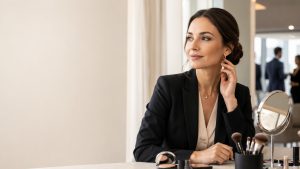
In a corporate event, image communicates before a single word is spoken.
The way a person presents themselves can convey care, professionalism, confidence, and attention to detail. This is especially important in contexts where there is public exposure, contact with clients, partners, media, teams, or audiences.
Corporate event makeup does not need to be heavy, overly marked, or obvious. On the contrary, in most cases, the best result is one that enhances the face in a discreet, balanced, and natural way.
The goal is not to transform the person or create makeup that stands out more than their presence. The goal is to ensure a polished image, coherent with the context and ready for different situations: artificial lighting, photography, video, stage, networking, meals, presentations, and long event hours.
Well-planned makeup helps even out the skin, control shine, define the eyes, bring freshness to the face, and maintain a professional appearance throughout the day.
In a business environment, these details matter.
Makeup should adapt to the person’s role, the type of event, the dress code, the venue lighting, camera presence, and the intended image. A talk in an auditorium, an institutional video shoot, a team photoshoot, or a gala dinner do not require exactly the same result.
In this article, I explain how to think about corporate makeup in a practical, elegant, and context-appropriate way.
Corporate makeup is not party makeup
Makeup for corporate events has a different purpose from party makeup.
At weddings, private parties, or nights out, it may make sense to go for a more intense eye look, more visible shimmer, stronger lips, or higher-impact makeup. In a business event, the goal is different.
Makeup should convey care, professionalism, and confidence without appearing exaggerated or out of place.
This does not mean it has to be dull, washed out, or barely visible. It simply means it must be aligned with the context.
A corporate event may involve meetings, presentations, business contacts, interviews, photography, video, networking, or brand representation. In these moments, image should support communication, not distract from it.
The person should look prepared, confident, and comfortable.
Makeup that is too heavy can create an artificial effect, especially under strong lighting, photography, or video. It can also feel unsuitable in more institutional, technical, or professional settings.
On the other hand, makeup that is too minimal may disappear completely on stage, in photos, or on camera. Artificial light can erase definition, highlight shine, or make the face look less expressive.
This is why corporate makeup relies on balance.
The skin should look even, but not heavy. The eyes should be defined, but not overdone. The brows should be groomed but natural. The lips should have presence but not require constant maintenance.
The ideal result is when the person looks polished and confident, without makeup becoming the center of attention.
In a business context, makeup should enhance professional image. It should help the person feel good while communicating in a way that fits the environment.
Before choosing colors, intensity, or finish, it is important to understand the type of event, the person’s role, and the image they want to project.
A CEO giving a speech on stage may need a different approach than a team welcoming guests at a booth. An institutional video shoot requires different preparation compared to a business dinner. Corporate photography also has its own needs.
Party makeup can be more expressive and free. Corporate makeup should be more strategic.
And that strategy always starts with appropriateness.
Why image matters in business events
Image does not replace competence, experience, or preparation.
But it does influence perception.
In a business event, every detail communicates: clothing, posture, hair, makeup, expression, and even how the person feels about themselves.
A well-groomed image conveys attention, organization, and respect for the context. It shows preparation and that the moment has been valued.
This is especially important when there is public exposure.
A stage presentation, conference, business meeting, interview, photoshoot, recording, or product launch are moments that may be recorded and reused across multiple channels: websites, social media, press, commercial presentations, internal videos, or institutional materials.
In these cases, makeup is not just an aesthetic detail. It is part of professional image preparation.
Excess shine can stand out in photography. A lack of definition can make the face look tired on video. Washed-out lips can reduce expression presence. Undefined eyes can lose impact on stage or on camera.
Small adjustments can make a big difference in the final result.
Makeup helps balance the face under lighting, camera, and distance. It helps convey a fresher, more rested, and more confident image.
It can also impact confidence.
When a person feels well-groomed, they tend to feel more comfortable. This can reflect in posture, expression, speech, and interactions with others.
In a corporate event, this confidence matters.
There are conversations, presentations, unexpected photos, greetings, networking, and moments of representation for a company or project.
Personal image becomes connected to brand image.
This does not mean creating an artificial image. On the contrary, good corporate makeup should preserve authenticity, respecting personal style and role.
The goal is not to look different. The goal is to look prepared.
There is also a layer of coherence.
A premium brand, a tech company, a sales team, a consultancy, a financial institution, or a creative brand may each have different visual languages. Makeup should align with that language while remaining natural.
In a corporate event, image should support the message.
If the message is confidence, precision, approachability, innovation, or elegance, the visual presentation should reinforce it.
Makeup is part of that system.
Subtle, but important.
The goal: look polished, natural, and professional
Corporate event makeup should aim for a polished, natural, and professional result.
These three words matter.
Polished, because the skin, eyes, and lips should be worked in a way that conveys freshness, care, and presence.
Natural, because the person should still recognize themselves. Makeup should not create a mask or overly alter facial features.
Professional, because the result should fit the business context, the person’s role, and the level of exposure involved.
When this balance is achieved, makeup does not look excessive. It simply looks right.
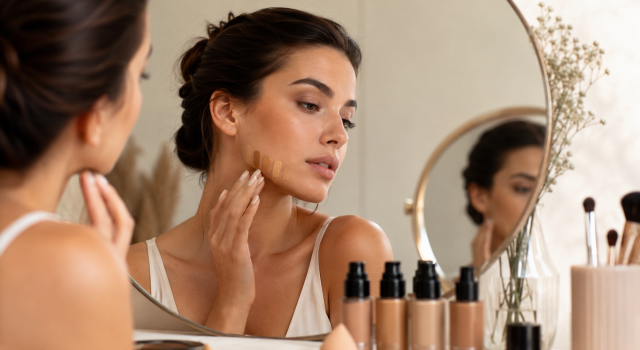
The skin should be even but still show real texture. The goal is not to fully cover everything, but to soften tone differences, correct small areas, and control shine where needed.
In corporate settings, overly heavy skin can look artificial, especially up close or in photography. But unprepared skin may develop shine, look tired, or lose definition under lighting.
The balance is in skin that is worked, but light.
The eyes are also essential.
Much communication happens through the eyes. In presentations, meetings, videos, and photos, well-defined eyes help bring presence and expression to the face.
This can be achieved with neutral eyeshadows, enhanced lashes, groomed brows, and subtle eyeliner when appropriate.
It is not necessary to create a very intense eye look. Often, small details are enough to open the eyes and add definition.
The lips should also be considered carefully.
Overly pale lips can disappear in photos or video. Overly strong lips may require constant maintenance, especially during meals, coffee breaks, long conversations, or presentations.
Natural, rosy, nude, mauve, or slightly more present tones usually work very well, depending on skin tone, outfit, and context.
The goal is to bring life to the face without creating concern.
Ideal corporate makeup should allow the person to focus on the moment, not on the makeup.
It should last for several hours, stay elegant, and adapt to lighting, movement, and interaction.
When makeup is well executed, the person does not need to constantly check if everything is in place. They can speak, smile, present, greet others and take part in the event with more confidence.
This is one of the biggest benefits of professional makeup in corporate events: creating a polished look that stays with the person without demanding constant attention.
Often, the best compliment is not “you are very made up”.
It is “you look great”.
Adapt makeup to the type of event
Not all corporate events have the same needs.
Makeup should be adapted to the context, duration, lighting, dress code, type of exposure and the person’s role in the event.
Makeup designed for stage is not exactly the same as makeup for a photo session. A video interview requires different care from a business dinner. An entire team at a brand event requires organisation and visual coherence.
That is why, before makeup, it is important to understand where, when and how the person will appear.
Conferences and talks
In conferences, talks and presentations, makeup needs to consider audience distance and stage lighting.
Lighting can reduce facial definition or increase unwanted shine. Therefore, the skin should be well balanced, with shine controlled in the right areas and some definition added to the eyes, brows and lips.
Those on stage may also experience heat, nerves, or spend several hours between backstage, conversations and photos.
Makeup should be long-lasting, but without looking heavy.
In these cases, slightly more definition may be needed compared to everyday makeup. The goal is for the face to remain expressive from a distance and in photographs.
Business dinners and gala events
Dinners, galas and more formal corporate events often allow for slightly more sophisticated makeup.
There may be room for a more polished complexion, slightly more defined eyes or lips with more presence.
Still, elegance remains the priority.
Makeup should match the outfit, the environment and the level of formality of the event, without becoming excessive. Even when more sophistication is allowed, the result should remain balanced and professional.
It is also important to think about durability, as these events usually involve meals, photos, greetings and several hours of interaction.
Photo sessions and headshots
In corporate photo sessions, makeup should be designed for the camera.
Photography can highlight shine, texture or uneven tones. It can also reduce facial definition, depending on the lighting used.
Therefore, the skin should be even, but neither too matte nor too luminous. The eyes should have enough definition so they do not disappear in the image. Brows should be well groomed, as they help frame the face.
In this type of makeup, the goal is to create a professional, approachable and authentic image.
It should not look like editorial or overly stylised makeup, unless that is the brand concept or the purpose of the shoot.
For headshots, the most important thing is that the person looks confident, current and natural.
Video recordings, interviews and filming
Makeup for video has its own specific characteristics.
The camera can flatten details, artificial light can increase shine, and movement can change how the face is perceived. In interviews or recordings, the person may also remain under strong lighting for extended periods.
In these cases, it is important to control shine, even out the skin and ensure that eyes and lips have enough presence.
Makeup that is too light may look invisible on camera. Makeup that is too heavy may look artificial, especially in close-up shots.
Balance is essential.
Makeup should work on camera, but still look natural in real life.
Team events or brand activations
When makeup involves multiple people, such as teams, staff, presenters, models, promoters or brand ambassadors, organisation becomes even more important.
In these cases, makeup should respect each individual face, while maintaining visual coherence.
A team does not need to be made up in exactly the same way. However, there should be alignment with the brand image, dress code and event purpose.
It is also important to consider timing, schedules, makeup order, touch-ups and backstage logistics.
In productions and events, makeup is not only application. It is part of preparation and the smooth flow of the day.
When everything is well organised, the final result is more consistent, professional and calm for everyone involved.
The skin should be even, but not heavy
In a corporate event, skin is one of the most important parts of makeup.
It is what most influences the perception of freshness, rest and care. Well-prepared skin helps the face look more even, more radiant and more ready for the event environment.
But there is a key point: the skin should be even, not heavy.
Makeup for business events should not create a mask. The goal is not to completely cover all facial features, but to soften uneven tones, correct small imperfections and control shine where necessary.
A foundation that is too thick can look artificial, especially in environments with strong lighting, photography or video. It can emphasise texture, settle into fine lines and create a less natural effect in real life.
On the other hand, skin without proper preparation can develop excess shine, look tired or lose definition under the lighting of the space.
The balance lies in skin that is worked with technique and lightness.
The choice of foundation should take into account skin type, event duration and context. Oily skin may require greater shine control. Dry skin may need more hydration and comfort. Sensitive skin requires gentler products and careful preparation.
In events with photography, video or stage lighting, the skin should also be considered in relation to light. Skin that is too luminous may appear oily on camera. Skin that is too matte may look dull or tired. The ideal is to create a natural, balanced and long-wearing finish.
Correction should be done strategically.
It is not always necessary to apply a full layer of foundation across the entire face. Often, a thin layer is enough to even out the skin tone, and concealer can be used only where more coverage is needed, such as under-eye circles, redness or small blemishes.
This type of application keeps the skin more realistic and comfortable.
Powder should also be used with intention. Instead of applying a heavy layer all over the face, it may be enough to set the T-zone — forehead, nose and chin — or areas that tend to get oily.
This way, the skin maintains a polished look without losing its natural finish.
Corporate makeup should last for several hours of an event, but it does not need to look rigid. The face should still have expression, texture and movement.
A well-done professional makeup look is one that does not draw attention to the foundation itself. It simply conveys a more rested, balanced and confident appearance.
Defined eyes help presence and communication
The eyes play a very important role in communication.
In a corporate event, the person may be presenting an idea, speaking with clients, giving an interview, taking part in a panel discussion, posing for photos or representing a brand. In all these moments, the gaze helps convey presence, attention and confidence.
For this reason, eye makeup should be carefully considered.
It does not need to be intense, but it should provide definition.
In business contexts, neutral eyeshadows usually work very well. Shades such as beige, soft brown, taupe, subtle bronze, champagne or neutral rose help enhance the eyes without creating excess.
The goal is to add depth to the gaze, not to make makeup the focal point of the look.
A subtle eyeliner can help define the lash line and make the eyes more expressive. It does not need to be heavy. Often, a thin line, softly blended or applied close to the lashes, is enough.
Mascara also makes a difference.
It helps open the eyes, add definition and make the face look more awake. For long events, it is important to choose a long-wearing formula, especially if there is heat, strong lighting, emotion or many hours of exposure.
Eyebrows should also be well groomed.
They frame the face and strongly influence expression. Overly defined brows can make the look harsher. Brows without any definition can make the face look less structured in photography or video.
The ideal approach is to fill only where necessary, respecting the natural shape.
In corporate makeup, it is important to avoid excess that could distract from communication. Very dark eyes, strong shimmer, glitter eyeshadows or overly dramatic lashes may not be suitable for all contexts.
This does not mean makeup must always be minimal or identical.
A business gala, a creative campaign or a brand event with a more expressive visual language may allow for a bolder approach. Even so, there should always be intention and coherence.
For photography and video, eyes may need slightly more definition than in everyday makeup. The camera tends to soften details, and lighting can reduce depth.
For this reason, well-defined eyes help maintain expression, professionalism and presence.
Eye makeup should support communication, not compete with it.
Lips: subtle, cared for and long-wearing
Lips are also part of a professional image.
In a corporate event, the person speaks, greets others, smiles, drinks water, has coffee, attends meals or gives presentations. For this reason, lip products should be comfortable, harmonious and long-lasting.
Lips that are too pale can make the face look tired, especially in photography or video. On the other hand, very dark or highly intense lip colours may require constant maintenance and draw too much attention depending on the context.
The goal is to find a shade that brings life to the face without creating concern.
Nude, pink, mauve, soft peach, light brown or subtle red tones can work very well, depending on skin tone, outfit, event and personality.
The choice should not be based only on trend, but on the overall look.
A person wearing very neutral clothing may benefit from a slightly more present lip colour. A stronger or colourful outfit may call for a more subtle lip. An institutional event may require softness. A gala may allow more sophistication.
Texture also matters.
Very creamy lipsticks can be comfortable but transfer more easily. Long-wear matte lipsticks may last longer but can sometimes feel drying. Glosses can look beautiful but are not always practical for long events with wind, photography or frequent interaction.
The balance between comfort and durability is essential.
In many cases, a good option is to use a lip liner to softly define and slightly fill the lips, followed by a comfortable or long-wearing lipstick. This helps maintain colour for longer and prevents uneven fading.
Lip care should also be considered before the event.
Dry or flaky lips can prevent any lipstick from applying smoothly. Care should start beforehand, with regular hydration and avoiding products that cause dryness or irritation.
During the event, it is useful to keep the chosen lipstick for touch-ups.
Even when makeup is professional and long-lasting, lips are a high-movement area with frequent contact. A simple touch-up after a meal or coffee can help maintain a polished look.
Lip makeup does not need to be the centre of attention.
But it should be present enough to balance the face, add freshness and maintain a professional appearance throughout the event.
Makeup for photography and video: what changes?
Makeup for photography and video has its own specific requirements.
What looks balanced in the mirror may behave differently under a camera, artificial light or flash.
In corporate events, this is especially important because visual records are often produced: photos for social media, corporate videos, interviews, conference recordings, press materials, team images or promotional content.
Makeup must work both in real life and in the final captured result.
Light can significantly change the perception of skin.
Strong lighting can increase shine on the forehead, nose and chin. Flash photography can highlight oiliness or reflective products. Cool lighting can make skin look paler or duller. Warm lighting can shift colour perception.
For this reason, skin should be carefully balanced.
It should not be overly shiny, but it should not be completely flat either. The goal is to control excess shine while maintaining natural luminosity.
Products with strong shimmer, glitter or reflective particles should be used carefully, especially on areas such as the forehead, nose, cheekbones or eyelids. In photography or video, they may reflect more than expected.
The camera also tends to soften definition.
Makeup that looks sufficient in real life may appear too subtle on camera. Therefore, in filmed contexts, slightly more definition may be needed on the eyes, brows, lashes and lips.
This does not mean heavy makeup.
It means adjusting intensity so the face remains expressive on screen.
Concealer and foundation should also be well blended. Visible lines, uneven tones between face and neck or excess powder may become more noticeable in images.
In close-up shots, skin texture can also become more visible. For this reason, a light application, well blended and adapted to the skin, usually works better than heavy layering.
Makeup for photography and video should aim for naturalness with definition.
The person should still look like themselves, but with a more polished, rested and camera-ready appearance.
This is especially relevant for CEOs, speakers, presenters, sales teams, trainers, moderators, interviewees or anyone representing a company in visual content.
When makeup is designed for camera, the final result becomes more consistent and professional.
The importance of durability
In a corporate event, makeup needs to last.
Often, the day starts early and ends several hours later. There may be travel, preparation, presentations, meetings, interviews, photography, meals, networking, greetings and stage moments.
Makeup should follow this rhythm without requiring constant attention.
Durability starts with skin preparation.
Well-cleansed, hydrated and prepared skin allows products to sit better and last longer. Product choice should take into account skin type, room temperature, event duration and exposure to strong lighting or cameras.
Long-wear products can be useful, but they are not the only solution.
More important than using very heavy foundation is applying products correctly, in thin layers, with strategic setting and without excess.
Makeup that is too heavy may initially seem durable, but over time it can build up, separate or emphasise texture. Well-constructed makeup tends to age better throughout the event.
Shine control is another essential point.
In corporate environments with artificial lighting, stage setups or photography, shine can become more noticeable. Therefore, mattifying should be done only where necessary, without removing the natural finish of the face.
Setting should also be adapted to the context.
For longer events, it may make sense to use setting spray, powder in strategic areas and long-wearing eye and lip products. In events with heat, movement or prolonged interaction, this preparation becomes even more important.
Touch-ups can be simple.
It is not always necessary to redo the makeup. Often, it is enough to remove excess shine with blotting paper, lightly reapply powder to the T-zone and touch up the lips.
In larger productions, with photography, video or stage work, it may be useful to have professional support for touch-ups throughout the event. This ensures the look remains consistent across different moments of the day.
Durability should not compromise comfort.
A good corporate makeup look should remain polished while still feeling light, comfortable and appropriate for the person.
The goal is for the person to focus on the event: presenting, communicating, welcoming guests, representing the brand or participating in the production with confidence.
When makeup lasts well, it stops being a concern.
And instead fulfills its purpose: supporting a professional, polished and coherent image from start to finish.
Makeup for teams, brands and productions
In many corporate events, makeup is not designed for just one person.
It may involve presenters, speakers, moderators, sales teams, staff, promoters, models, brand ambassadors, company leadership, or multiple people appearing in photography, video or on stage.
In these cases, makeup also becomes part of the event production.
The goal remains to enhance each face, but it is important to ensure some visual coherence among all the people involved. A team does not need to be made up in the same way, nor should it lose its individuality. However, the overall image should look polished, aligned and appropriate to the brand.
This is especially important in events where image capture is involved.
Team photos, corporate videos, interviews, campaigns, brand activations, conferences or public presentations may be used for a long time on websites, social media, sales materials, press or internal communications.
Therefore, the image should be considered with intention.
Makeup can help create a more uniform appearance among different people without making the result artificial. It can control shine, soften signs of fatigue, define facial features and ensure each person looks good under light and camera.
When there are several people to do makeup for, organization is also essential.
It is important to know how many people will be made up, how much time is available, who needs to be ready first, whether there will be photos before the event, whether there will be recordings, whether touch-ups will be needed, and what level of formality is intended.
In productions and events, makeup does not happen in isolation. It must integrate with schedules, clothing, hair, lighting, photography, video and backstage logistics.
Good organization prevents delays, reduces stress and allows for a more consistent result.
It is also important to consider brand identity.
A more institutional brand may call for very natural, subtle and polished makeup. A creative brand may allow for a slightly more expressive result. A premium brand may seek greater sophistication. A technology company may prefer a modern, simple and clean look.
Makeup should follow that positioning.
When well thought out, it does not overpower the brand or the people. It simply helps reinforce the intended image.
In corporate events, professional makeup can make a difference precisely because it combines aesthetics, technique and context.
It is not just about applying products. It is about understanding the production goal, the environment, the light, the available time, the type of people involved and how the image will be used afterwards.
The result should be natural, polished and coherent.
Common mistakes in corporate event makeup
Makeup for corporate events requires balance.
When that balance fails, the result may look too heavy, unsuitable for the context or not durable throughout the event.
Knowing the most common mistakes helps avoid them.
Using overly heavy makeup
One of the most frequent mistakes is applying too much product.
A foundation that is too thick, heavily made-up eyes, strong contouring or excess powder can look artificial, especially in photography, video or strong lighting.
In a business context, makeup should convey care and professionalism, not distraction.
This does not mean the result must be invisible. It means it should be built with lightness, intention and adaptation to the context.
The skin should look like skin. The eyes should be defined. The lips should have presence. But the overall look should remain elegant and natural.
Ignoring the venue lighting
Lighting completely changes how makeup is perceived.
An event in an auditorium, a room with white lighting, a stage with spotlights, a professional recording setup or a dinner with low light all require different approaches.
If the light is very strong, skin shine may become more visible. If it is very dim, makeup may need more definition. If there is flash, some products may reflect too much.
Therefore, makeup should be designed with the real event environment in mind.
A look that seems perfect in the mirror may not perform the same way on stage or on camera.
Not controlling shine
Excess shine is one of the most noticeable aspects in photography and video.
The T-zone — forehead, nose and chin — can stand out under artificial light or flash. This can make the skin look oily, even when it does not appear so in person.
Controlling shine does not mean making the skin completely matte. It means strategically mattifying the right areas while maintaining natural luminosity where it flatters the face.
A balanced complexion conveys freshness. A complexion with uncontrolled shine may convey tiredness or lack of preparation.
Choosing a look that is too trend-driven
Trends can be interesting, but they are not always suitable for corporate environments.
Strong colours, intense shimmer, graphic eyeliner or very specific finishes may work in creative, editorial or fashion contexts. But in more institutional business events, they may feel out of place.
Corporate makeup should be current but also timeless.
The ideal is to aim for a result that still makes sense in photos and videos long after the event. A look too tied to a trend may age faster.
Not considering the duration of the event
Makeup may look beautiful at the beginning but lose quality after a few hours if it is not designed to last.
Corporate events can be long. They may include presentations, meals, interviews, movement between spaces, greetings, photos and many hours of interaction.
Therefore, makeup should be built to withstand it.
Skin preparation, suitable products, strategic setting and possible touch-ups should all be considered from the start.
Durability is part of the final quality of makeup.
How to prepare before professional makeup
For professional makeup to work at its best, it is also important to prepare properly.
This does not require a complicated routine. On the contrary, the simpler and clearer the preparation, the better.
Before corporate event makeup, the ideal is to arrive with clean, comfortable skin and without excess products. Heavy creams, dense oils or residue-heavy products can interfere with foundation application and reduce makeup longevity.
If you already have a skincare routine, it can be maintained as long as the products are well tolerated and do not leave the skin overly oily or sensitised.
It is also important to avoid trying new products on the day itself.
A serum, mask, exfoliator or unknown cream may cause redness, burning, breakouts or discomfort. On an event day, it is best not to take risks.
If there are allergies, sensitivities, rosacea, active acne, very dry skin or any usual reactions, this information should be shared before the makeup. This allows for adaptation and more suitable product choices.
It also helps to share information about the event.
The type of event, schedule, duration, location, dress code, clothing colours, and whether there will be photography, video or stage presence are all important details.
Makeup for a stage presentation may not be the same as makeup for a formal meeting. A studio recording may require different care than a business dinner. A team photo session may require more uniformity among several people.
The more context available, the more tailored the result will be.
It can also be useful to indicate the desired style.
Some people prefer very subtle makeup. Others like slightly more defined eyes. Some want to keep their look as natural as possible. Others prefer a more polished and sophisticated result.
Professional makeup should respect the person but also guide the result so it works within the event context.
Finally, it is important to plan enough time.
Makeup done in a rush rarely allows the same level of care. In events with multiple people, scheduling becomes even more important. There should be enough margin for preparation, application, small adjustments and possible touch-ups before stage entry, photography or recording.
Good preparation makes the whole process smoother.
And this reflects in the final result.
Checklist for corporate event makeup
Before corporate event makeup, this checklist can help organise essential information.
Confirm:
- type of event;
- start time;
- expected duration;
- event location;
- presence of natural or artificial light;
- stage presence;
- photography;
- video recording;
- social media or press recordings;
- dress code;
- clothing colours;
- brand or company style;
- desired image: subtle, natural, sophisticated or more defined;
- role of the person at the event;
- number of people to be made up;
- preparation order;
- time available per person;
- need for touch-ups during the event;
- skin sensitivity or allergies;
- preferred tones;
- products to avoid;
- need for visual coherence within the team;
- makeup location setup;
- lighting conditions in the preparation area;
- access to power outlet, table and chair if needed;
- final ready time.
This checklist is especially useful for events involving multiple people or image production.
It helps prevent unexpected issues and allows makeup to be planned in a more strategic way.
In a corporate context, small details can have an impact on the final result. Knowing whether there will be flash, video, stage or many hours of event allows for adjustments in products, intensity and longevity.
Makeup should be beautiful, but also functional.
And the better the preparation, the more natural and smooth the process will be.
Conclusion: a well-groomed image reinforces professional presence
Makeup for corporate events should be designed with intention.
The goal is not to transform the person, create an artificial image or make makeup the centre of attention. The goal is to enhance the face, reinforce professional presence and ensure a polished image throughout the event.
In a business context, image communicates.
It communicates preparation, care, confidence and coherence. It can influence how a person feels, how they present themselves and how they are perceived by others in person, in photography or in video.
Good corporate makeup should respect personal identity and adapt to context.
It can be more subtle in an institutional meeting, more defined in a talk, more polished in a photo session or more sophisticated in a corporate gala. In all cases, it should maintain balance, elegance and professionalism.
The skin should look even, but not heavy. The eyes should be defined, but not excessive. The lips should bring life to the face, but not require constant maintenance. Makeup should last, resist light and work across different moments of the event.
When teams, brands or productions are involved, makeup also contributes to visual coherence and to the organisation of the final image.
Ultimately, corporate event makeup should support both the person and the event.
It should allow those on stage, in front of the camera or interacting with the public to feel more confident, more prepared and more comfortable.
When the image is well cared for, the person can focus on what truly matters: communicating, representing, presenting and participating with confidence.
Frequently asked questions about corporate event makeup
What type of makeup is most suitable for corporate events?
The most suitable makeup is the one that conveys a polished, natural and professional image.
It should even out the skin, control shine, define the eyes and give presence to the face, without looking excessive or out of place in a business context.
The result can be more subtle or more sophisticated, depending on the type of event, the person’s role and the presence of photography, video or stage.
Should corporate makeup be very subtle?
It should be balanced.
Makeup that is too strong may look inappropriate in some business environments. But makeup that is almost invisible may disappear in photography, video or on stage.
The ideal is to create a natural look with enough definition so the face retains presence and expression.
Is corporate photography makeup different from everyday makeup?
Yes.
Camera, lighting and flash can change how makeup appears. They can increase shine, reduce definition or highlight tone differences.
For this reason, corporate photography makeup should be designed for the final image: balanced skin, defined eyes, groomed brows and naturally present lips.
Does it make sense to hire a makeup artist for a corporate event?
Yes, especially when there is public exposure, photography, video, press, stage presence, interviews, brand launches or content production.
Professional makeup helps ensure a polished, long-lasting image adapted to the context. It also allows for greater consistency when multiple people are involved.
How should I prepare my skin before makeup?
The ideal is to arrive with clean, comfortable skin and without excess products.
Heavy oils, rich creams, exfoliants or new products on the day should be avoided. If there is sensitivity, allergy or any specific concern, it should be communicated before the makeup application.
Will makeup last through an entire event?
When designed according to skin type, event duration, lighting and context, makeup can remain polished for several hours.
In very long events with meals, stage presence, heat or filming, simple touch-ups may be planned to control shine, refresh lips or maintain consistency in photography and video.
Does video makeup need to be heavier?
Not necessarily heavier, but it may need more definition.
The camera tends to soften details, so eyes, brows, lashes and lips may need slightly more emphasis than in everyday makeup.
The goal remains naturalness, but with enough presence for the screen.
Is it possible to do makeup for several people in the same event?
Yes.
In these cases, it is important to plan schedules, number of people, order of preparation, desired style and possible need for touch-ups.
Makeup can be adapted to each face while maintaining visual coherence with the brand, the event and the production.
Are you organising an event, photo shoot, recording or corporate presentation?
Professional makeup helps ensure a polished, coherent image ready for photography, video, stage and public interaction.
Filipa Villar Afonso provides makeup for productions, corporate events, photo shoots, recordings, teams and brands, adapting the result to the context, lighting and desired image.
If you are preparing a corporate event, conference, institutional recording or brand production, you can send the details to receive a personalised proposal.
View Productions and Events service
Request a proposal